
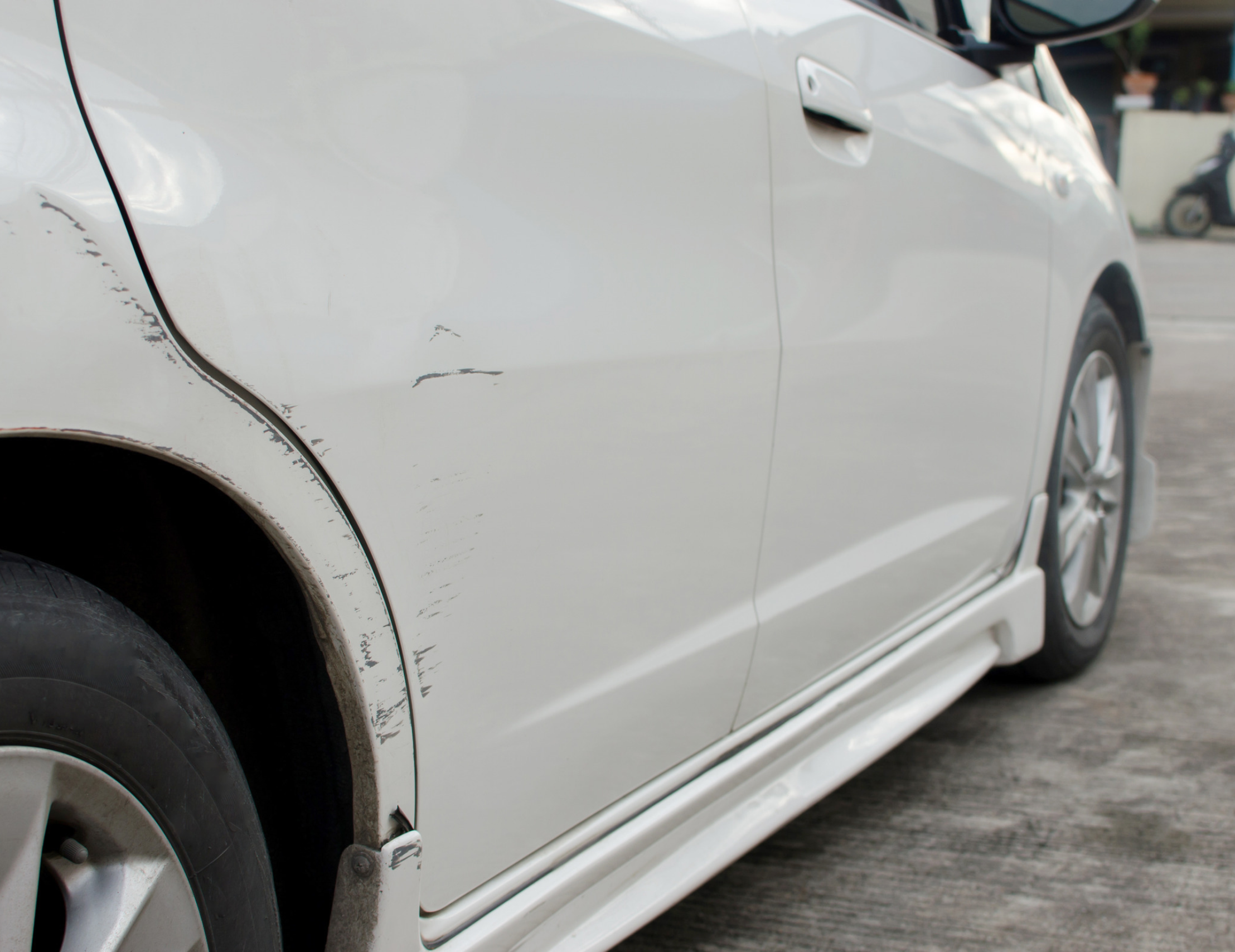
Every mark on your car may not require the same fix.
A shopping trolley scratch, a little parking dent or a deep crease from a collision all may look like “body damage”, but the right way to fix it can be completely different.
For many drivers, the bigger question is a simple one: Is the damage worth fixing or can I leave it alone?
In the case of minor cosmetic damage, the decision may depend on the depth, location and condition of the paint . Larger dents can also cause issues with panel integrity, paint damage, alignment, or even hidden damage behind the affected area.
Knowing the difference between minor scratches and major dents will help you decide when a professional car scratch and dent repair in Melbourne is worthwhile.
Minor Scratches: Are They Worth Repairing?
A small scratch may seem like nothing more than a cosmetic problem. But not all scratches are created equal.
A light surface mark may only be the clear coat, while a deeper scratch may go through the paint layers and expose the material underneath.
First, you will want to consider the depth of the scratch.
Light Surface Scratches
Very light scratches can be in clear coat only.
Depending on severity, these can sometimes be improved by professional polishing or paint correction.
If the scratch is not too deep and doesn’t go all the way through the paint on the car, you may not have to repaint the entire panel.
Deeper Paint Scratches
Very light scratches may be in clear coat only.
These can sometimes be improved by professional polishing/paint correction depending on severity.
If the scratch is not too deep and does not go all the way through the car paint, you may not have to repaint the entire panel.
Scratches With Bare Metal Showing
If a scratch goes through paint and exposes bare metal, it is more likely to be subject to corrosion if it is left untreated for a long period of time.
That is one of the reasons why a seemingly small scratch should not be dismissed just so.
A professional evaluation can help you decide if the damage is merely cosmetic or if refinishing is the right choice.
Small Dents: Repair or Ignore?
Small dents are very frequent.
Parking incidents, shopping trolleys, hail or light bumps can cause shallow dents without breaking the paint.
That’s where Paintless Dent Removal (PDR) can come to the rescue.
PDR is designed for suitable shallow dents where the original paint remains intact. Instead of sanding, filling and repainting the panel, a technician uses specialised tools to carefully reshape the metal from behind.
The advantage is that the vehicle can maintain its original factory paint.
But PDR isn’t the answer for every dent. Severe creases, cracked paint, stretched metal and certain panel locations may require conventional panel repair.
Major Dents: When Repair Becomes More Important
A major dent is different from a small parking ding.
Large dents can distort the shape of a panel, damage the paint and affect surrounding components. If the impact was caused by a collision, there may also be damage that isn’t visible from outside.
This is why a professional car dent repair in Melbourne should begin with a proper assessment rather than immediately choosing a repair technique.
A technician may need to determine:
- How deeply the panel has been damaged
- Whether the metal has been stretched
- Whether the paint is cracked or missing
- Whether the panel can be reshaped
- Whether surrounding panels have moved
- Whether mounting points have been affected
- Whether there is hidden damage behind the panel
The answer determines whether PDR, panel beating, refinishing or panel replacement is appropriate.
Minor Scratch vs Major Dent: What’s the Difference?
The easiest way to understand the decision is to compare the two types of damage.
Damage | Typical Characteristics | Possible Repair Approach |
Light surface scratch | Clear-coat level damage | Polishing or paint correction |
Deep scratch | Paint layer damaged | Refinishing or paint repair |
Small shallow dent | Paint intact, panel lightly distorted | PDR |
Medium dent | More noticeable panel distortion | PDR or panel repair depending on condition |
Deep crease | Metal significantly distorted | Panel beating and refinishing |
Dent with cracked paint | Paint and panel both damaged | Panel repair and repainting |
Major collision dent | Significant body distortion | Panel repair/replacement and possible structural assessment |
These are general examples rather than fixed rules. The appropriate repair depends on the vehicle and the exact condition of the damage.
When Is Paintless Dent Removal the Better Option?
One of the biggest benefits of PDR is that it can repair appropriate dents without interfering with the original paint of the vehicle.
Imagine somebody opening a car door into your car in a shopping centre car park.
You have a shallow dent on the door but the paint is not chipped or cracked.
In a proper circumstance PDR may allow the technician to restore the panel to its original condition without the need for filling, sanding or repainting.
This can make PDR a good option for:
- Parking dents
- Small door dings
- Hail damage
- Shallow panel dents
- Minor cosmetic damage with intact paint
However, the damage should be inspected before deciding that PDR is appropriate.
When Does a Dent Need Traditional Panel Beating?
Traditional panel beating in Melbourne is more relevant when the damage is too severe or complex for PDR.
Deep dents and sharp creases can warp or stretch the metal. Refinishing may also be necessary when paint is cracked, damaged or missing.
Panel beating may include reshaping the damaged metal, prepping the surface and restoring the panel’s original contours before refinishing.
South East Collision Centre says its panel beating service can handle everything from minor door dings to deeper creases and more serious collision damage.
In some cases it may be appropriate to repair the existing panel. In others, replacement may be more appropriate.
The decision should be made based on the actual condition of the panel not just the size of the dent.
Don’t Judge Damage Only by Appearance
One of the most important things to remember is that.
A small dent does not always mean that there is no damage underneath.
An impact might affect mounting points, parts behind a bumper or panel, alignment, and other parts not visible from the outside.
South East Collision Centre say that sometimes apparently minor accident damage can be hiding more serious problems, which is why a proper inspection after a collision is so important.
For example, a bumper may appear to have a small crack, but the parts behind it may be damaged as well.
Similarly, a dented panel may be purely cosmetic, but the mounting points or surrounding components need to be checked out.
That’s not to say every little scratch or ding hides major damage.
It means the cause of the damage matters.
A small parking ding and a small-looking collision impact shouldn’t automatically be treated in exactly the same way.
When Is It Okay to Leave a Scratch or Dent?
There are situations where immediate repair may not be essential.
For example, if you have a very light surface scratch that hasn’t penetrated the paint, you may decide to monitor it or have it professionally polished when convenient.
Likewise, a small cosmetic dent with intact paint may not create an immediate mechanical concern.
But you should consider repairing it sooner if:
- Paint has cracked or peeled
- Bare metal is exposed
- The panel is loose or distorted
- A door, bonnet or boot doesn’t close correctly
- There are sharp edges
- The damage resulted from a collision
- You notice unusual noises or changes in vehicle behaviour
- Sensors, lights or other components appear affected
If you’re unsure, getting the damage assessed is generally more sensible than guessing.
Why Leaving Deep Scratches Can Be a Problem
A scratch that penetrates the protective layers of paint can leave the underlying surface vulnerable.
Corrosion can be a concern when bare metal is exposed to moisture and the environment, depending on the vehicle and severity of the damage.
A deep scratch is not always just a cosmetic issue, which is why.
The earlier you know the state of the damage, the more options you may have to deal with it.
A professional restorer can tell you if the area needs to be polished, touched up, refinished or if a more extensive repair is needed.
What About Car Resale Value?
The exterior condition of your vehicle can impact how potential buyers view it.
Multiple dents, visible scratches and poorly repaired bodywork can make a car look neglected even if the engine and mechanical parts are in good working order.
It doesn’t mean that every little mark needs an expensive fix right away.
But look at the overall shape of the vehicle.
If you’re thinking of selling the car soon, repairing visible cosmetic damage can make the vehicle more attractive to potential buyers and improve its presentation.
If you’re holding onto the car for many years, the priority might be to keep paint or body damage from getting harder or more expensive to fix.
How Much Does Scratch and Dent Repair Cost?
There isn’t one fixed price for car scratch and dent repair in Melbourne.
The cost depends on several factors, including:
- Size of the damaged area
- Depth of the scratch or dent
- Location on the vehicle
- Whether the paint is damaged
- Whether PDR is possible
- Whether panel beating is required
- Whether repainting is necessary
- Whether a panel needs replacement
- Whether hidden collision damage is discovered
A small dent that can be repaired using PDR is likely to require a very different process from a deep collision dent requiring panel reshaping and refinishing.
This is why an inspection and repair assessment are more useful than trying to estimate the cost based solely on a photograph.
Repair or Replace: What Should You Choose?
Not every dented panel has to be replaced.
A skilled repairer may be able to restore the existing panel depending on the severity and location of the damage.
Depending on the extent of damage to the component, South East Collision Centre can either repair or replace the panel.
When is a damaged panel repairable?
- The underlying metal remains structurally suitable
- The damage can be reshaped
- The panel isn’t excessively stretched
- The repair can achieve an appropriate finish
Replacement might be more appropriate if the component is badly damaged or cannot be effectively restored.
The right decision should be made based on the quality of repair safety, practicality and the condition of the component.
What If the Scratch or Dent Came From an Accident?
If the damage was from a collision, don’t automatically think of it as a cosmetic repair.
Sometimes the impact can affect more than the visible panel, even if the vehicle is still driveable.
A professional collision assessment might examine:
- Panel alignment
- Bumpers
- Mounting points
- Lights
- Wheels and tyres
- Electrical components
- Structural areas
- Suspension or alignment
- Other components behind the damaged area
The collision repair process at South East Collision Centre starts with a damage assessment and can include panel repair, panel replacement, refinishing and other checks depending on the damage.
It’s particularly important to have professional assessment if the accident involved a major impact.
Choosing a Repairer for Scratch and Dent Damage
looking for smash repairs in Melbourne, don’t just go for the cheapest quote.
Ask about the workshop’s approach to the damage.
A good repair assessment should include whether PDR is suitable, can the panel be repaired, is paint matching required and could there be hidden damage.
South East Collision Centre offers scratch and dent repairs, PDR, panel beating, spray painting and collision repair from its Clyde North workshop serving Cranbourne, Carrum Downs and Lynbrook.
The workshop also includes pre-repair damage assessment, which can be crucial when the extent of the damage is not immediately obvious.
A Simple Decision Guide
If you’re standing beside your car wondering whether that scratch or dent is worth repairing, start with these questions:
Is the paint damaged?
If no, PDR or paint correction may be possible depending on the damage.
Is the metal deeply dented or sharply creased?
If yes, traditional panel repair may be more appropriate.
Is bare metal visible?
Don’t ignore it indefinitely. Have the damage assessed to determine whether refinishing is required.
Did the damage come from an accident?
Consider a professional inspection rather than treating it as purely cosmetic.
Does the panel, door, bonnet or boot still operate normally?
If not, the damage may involve more than appearance.
Are you unsure?
Get a professional assessment before deciding.
Frequently Asked Questions
Is it worth repairing a small car scratch?
Depending on the depth of the scratch. Very light surface scratches can be improved with polishing or paint correction, while deeper scratches may need refinishing. A professional assessment will help you to decide what to do.
Can small dents be repaired without repainting?
Yes. Suitable dents with intact paint may be repaired using Paintless Dent Removal. PDR works by carefully reshaping the panel from behind without traditional sanding, filling or repainting.
Is PDR suitable for every dent?
No. PDR is generally best suited to appropriate dents where the original paint remains intact and the metal hasn’t been excessively stretched. Deep creases, cracked paint and severe panel damage may require conventional repair.
Should I repair a dent if the car is still safe to drive?
If the dent resulted from an accident, it’s sensible to have the vehicle assessed even if it remains driveable. Visible damage doesn’t always reveal what happened behind the panel.
Can a small dent cause hidden damage?
It can, particularly when the dent was caused by a collision rather than a simple low-force parking incident. Components behind panels or bumpers may sometimes be affected.
Is panel beating better than PDR?
Neither method is automatically better. PDR is useful for suitable minor dents with intact paint, while panel beating is appropriate for deeper or more complex damage. The correct technique depends on the condition of the vehicle.
Should I repair scratches before selling my car?
If the scratches are noticeable, fixing them may make the vehicle look better overall. But whether it is worth getting it repaired financially depends on the value of the car, the cost of the repair and how serious the damage is.
The Bottom Line: Assess the Damage Before Deciding
A small scratch doesn’t necessarily warrant an expensive fix, and a big dent doesn’t necessarily mean you have to replace the entire panel.
The correct choice depends on depth, paint condition, panel distortion, location and cause of damage.
If the paint is not broken and the dent is not severe, Paintless Dent Removal could be an efficient way to restore the panel to its original finish. For more serious dents, deep scratches and collision damage, panel beating, refinishing or replacement may be necessary.
And most important, don’t judge a collision by its outward appearance.
If you have scratches, dents or accident damage in Clyde North, Cranbourne, Carrum Downs, Lynbrook or surrounding Melbourne south-east, a professional assessment can help you understand whether repair is worthwhile and which repair method is appropriate.
At South East Collision Centre we begin the repair process by assessing the damage and determining how it should be repaired. That means you’re not just fixing what looks broken, you’re ensuring the right repair is made for the condition of the vehicle.